The Masonic trial of Praxis Lodge Venerable Master has made it to the Blog for Freemasonry for Dummies, which coincidentally, and perhaps comically, was one of the references cited in the charges against Bro. and V.M. Hartung, among the Complete Idiot's Guide to Freemasonry. So much for scholarly works.
The Blog is viewable here, and includes comments from Chris Hodapp (author)and Bro. Hartung himself.
http://freemasonsfordummies.blogspot.com/2010/08/idaho-mason-expelled.html#links
Saturday, August 28, 2010

Friday, August 13, 2010
Results of Masonic Trial Against Praxis Lodge Venerable Master
Today, August 13 at 10am, a history-making Masonic Trial was held in Boise, Idaho with charges against Freemason, Krispen Hartung. Brother Hartung was charged with "unmasonic conduct", and in particular for establishing and being a member of a "irregular" lodge of Freemasonry (Praxis Lodge, a Modern Lodge of Freemasonry, under the Grand Orient of the United States, and in amity with the Grand Orient of France) that does not require its members to believe in God or gods, does not use the Bible in lodge rituals and meetings, and allows discussion of politics and religion in the lodge setting.
During the trial, Brother Hartung pleaded "Not Guilty" to the charges and read a formal response and explanation to his plea. That response can be downloaded or viewed here.
Brother Hartung's argument was multifaceted, but the most powerful points made were in his closing paragraphs:
"In closing, I will admit that I have built and am currently a member of a Modern lodge of Freemasonry, but I cannot sincerely and with any rational basis admit to this trial committee that this lodge is "irregular", let alone an indication of any unmasonic behavior, based on the charges and explanations presented to me. I reject your misguided definition and concept of irregularity. I reject it for the same reasons that I reject the uncivilized and dogmatic beliefs that black people cannot run for office, that women can't vote, or that human beings do not have the right to free speech and expression. I reject it because it is inherently flawed and out of date, and the ever-changing history of Freemasonry does not justify the notion of regularity as a principle of Universal Freemasonry and brotherhood. I furthermore reject your notion of irregularity because I regard it as morally suspect, and the charges made against me, rather than providing a moral argument for my alleged unmasonic conduct, rely solely on definitions, semantics, and out of date principles.
Any fraternity that judges the worth of a member or potential candidate based on his private theological beliefs and not his character, or forces him to compromise his freedom of conscience, is not a fraternity that I want to be associated with in any way or form. I regard such behavior as myopic, uncivilized, and absurd. This is based solely on territorial politics and on drawing superficial and arbitrary boundaries of class membership, not the principles of universal brotherhood."
I therefore request that you do whatever you deem appropriate. If that means that you have to put me on trial for so-called unmasonic conduct, then so be it; but I will state for the record that this is not an act of justice, an act of morality, or one of a fraternity that embraces brotherhood, but an act of ignorance and stubbornness, and a refusal to evolve to a higher standard of humanity and Freemasonry."
The trial committee discussed the charges and Brother Hartung's response for over an hour. They voted and the verdict was that Brother Hartung was guilty of the above mentioned charges, and will be expulsed from Boise Lodge #2 and the Grand Lodge of Idaho. Note, this is actually what Brother Hartung wanted last November, but they did not acknowledge his request, but instead decided to charge him.
The outcome of the trial was as expected. Based on the rules, regulations, and definitions of the Grand Lodge of Idaho, Brother Hartung is indeed a member of an irregular lodge of Freemasonry, which is a sufficient basis to warrant unmasonic conduct. However, Brother Hartung's response to the charges raised several philosophical issues around the moral implications of Anglo-American or "mainstream" Freemasonry's requirement for members to believe in God, among other religiously rooted requirements and principles that render them a non-secular Fraternity.
During the trial, Brother Hartung pleaded "Not Guilty" to the charges and read a formal response and explanation to his plea. That response can be downloaded or viewed here.
Brother Hartung's argument was multifaceted, but the most powerful points made were in his closing paragraphs:
"In closing, I will admit that I have built and am currently a member of a Modern lodge of Freemasonry, but I cannot sincerely and with any rational basis admit to this trial committee that this lodge is "irregular", let alone an indication of any unmasonic behavior, based on the charges and explanations presented to me. I reject your misguided definition and concept of irregularity. I reject it for the same reasons that I reject the uncivilized and dogmatic beliefs that black people cannot run for office, that women can't vote, or that human beings do not have the right to free speech and expression. I reject it because it is inherently flawed and out of date, and the ever-changing history of Freemasonry does not justify the notion of regularity as a principle of Universal Freemasonry and brotherhood. I furthermore reject your notion of irregularity because I regard it as morally suspect, and the charges made against me, rather than providing a moral argument for my alleged unmasonic conduct, rely solely on definitions, semantics, and out of date principles.
Any fraternity that judges the worth of a member or potential candidate based on his private theological beliefs and not his character, or forces him to compromise his freedom of conscience, is not a fraternity that I want to be associated with in any way or form. I regard such behavior as myopic, uncivilized, and absurd. This is based solely on territorial politics and on drawing superficial and arbitrary boundaries of class membership, not the principles of universal brotherhood."
I therefore request that you do whatever you deem appropriate. If that means that you have to put me on trial for so-called unmasonic conduct, then so be it; but I will state for the record that this is not an act of justice, an act of morality, or one of a fraternity that embraces brotherhood, but an act of ignorance and stubbornness, and a refusal to evolve to a higher standard of humanity and Freemasonry."
The trial committee discussed the charges and Brother Hartung's response for over an hour. They voted and the verdict was that Brother Hartung was guilty of the above mentioned charges, and will be expulsed from Boise Lodge #2 and the Grand Lodge of Idaho. Note, this is actually what Brother Hartung wanted last November, but they did not acknowledge his request, but instead decided to charge him.
The outcome of the trial was as expected. Based on the rules, regulations, and definitions of the Grand Lodge of Idaho, Brother Hartung is indeed a member of an irregular lodge of Freemasonry, which is a sufficient basis to warrant unmasonic conduct. However, Brother Hartung's response to the charges raised several philosophical issues around the moral implications of Anglo-American or "mainstream" Freemasonry's requirement for members to believe in God, among other religiously rooted requirements and principles that render them a non-secular Fraternity.
Tuesday, August 10, 2010
Background Behind the Masonic Trial of Praxis Lodge Venerable Master
Below is a detailed background behind the upcoming trial of Praxis Lodge Venerable Master, Krispen Hartung.
In August, 2009, Brother Krispen Hartung submitted a simple request to the officers of Boise Lodge #2 of the Grand Lodge of Idaho, wherein he stated that he wanted to demit because the Lodge was no longer meeting his needs and he was potentially interested in joining the Idaho Research Lodge. He was sent a confirmation of his demit within days with no questions asked; however, before the demit documentation was sent to the Grand Lodge of Idaho, he was informed that in order to remain a member of the Shriners (of which we was currently a member), he had to maintain membership in a standard lodge under the Grand Lodge of Idaho, and a research lodge could not serve this purpose. Consequently, Brother Hartung decided to hold off on his demit until he was certain of what he wanted to do. He did not at this time, however, let Boise Lodge #2 know that he was building a new Modern Lodge of Freemasonry in Boise, Praxis Lodge, as this work was too premature to announce.
On November 10, 2009, after careful deliberation on the matter, Brother Hartung sent a second an final demit request to Boise Lodge #2, wherein he revealed exactly what he was doing with Praxis Lodge and his detailed reasons for wanting to demit. A digital copy of that request can be viewed or downloaded here. Brother Hartung's reasons for demit are summarized as follows:
In August, 2009, Brother Krispen Hartung submitted a simple request to the officers of Boise Lodge #2 of the Grand Lodge of Idaho, wherein he stated that he wanted to demit because the Lodge was no longer meeting his needs and he was potentially interested in joining the Idaho Research Lodge. He was sent a confirmation of his demit within days with no questions asked; however, before the demit documentation was sent to the Grand Lodge of Idaho, he was informed that in order to remain a member of the Shriners (of which we was currently a member), he had to maintain membership in a standard lodge under the Grand Lodge of Idaho, and a research lodge could not serve this purpose. Consequently, Brother Hartung decided to hold off on his demit until he was certain of what he wanted to do. He did not at this time, however, let Boise Lodge #2 know that he was building a new Modern Lodge of Freemasonry in Boise, Praxis Lodge, as this work was too premature to announce.
On November 10, 2009, after careful deliberation on the matter, Brother Hartung sent a second an final demit request to Boise Lodge #2, wherein he revealed exactly what he was doing with Praxis Lodge and his detailed reasons for wanting to demit. A digital copy of that request can be viewed or downloaded here. Brother Hartung's reasons for demit are summarized as follows:
- Lack of personal needs being met
- Irreconcilable philosophical differences with Blue Lodge or “Antient” Freemasonry
- Membership of Masonic obediences and orders deemed “irregular” by Blue Lodge Masonry
- Leadership of two Modern Lodges
- Acceptance and establishment of co-gender Masonry
Praxis Lodge Venerable Master put on Masonic Trial by Boise Lodge #2 of the Grand Lodge of Idaho
On August 2, 2010, Boise Lodge #2, Ancient Free & Accepted Masons, of the Grand Lodge of Idaho, summoned Krispen K Hartung to appear at a Masonic Trial on Friday, August 13 at 10am. The summons included an explanation of charges made against him, which had been submitted to the Worshipful Master of the Lodge on December 29, 2009.
The summons and explanation of charges are viewable or downloadable here and also below, but in summary, Brother Hartung was charged for "unmasonic conduct", specifically that he had built and was a member of an "irregular" lodge, namely Praxis Lodge, a "Modern" lodge of the Grand Orient of the United States, who is in amity and regular communication with the Grand Orient of France.
The charges further state that Praxis Lodge is "irregular" because a) it does not require members to belief in God, b) it does not require the "Volume of the Sacred Law" (normally a Holy Bible) as an "indispensable part of the Furniture of the Lodge", and c) that it allows discussion of religion and politics in the Lodge. These three practices are described as in violation of the "Ancient Landmarks" of Freemasonry and of the Masonic Idaho Code and Digest.
In short, Praxis Lodge was deemed "irregular" because of its secular nature. This irregularity is based on the standards of the Grand Lodge of Idaho in opposition to the to the principle of Freedom of Conscience, which is a key principle of the Grand Orient of the United States and the Grand Orient of France, allowing freedom of speech, expression, and thought by all Freemasons.


The summons and explanation of charges are viewable or downloadable here and also below, but in summary, Brother Hartung was charged for "unmasonic conduct", specifically that he had built and was a member of an "irregular" lodge, namely Praxis Lodge, a "Modern" lodge of the Grand Orient of the United States, who is in amity and regular communication with the Grand Orient of France.
The charges further state that Praxis Lodge is "irregular" because a) it does not require members to belief in God, b) it does not require the "Volume of the Sacred Law" (normally a Holy Bible) as an "indispensable part of the Furniture of the Lodge", and c) that it allows discussion of religion and politics in the Lodge. These three practices are described as in violation of the "Ancient Landmarks" of Freemasonry and of the Masonic Idaho Code and Digest.
In short, Praxis Lodge was deemed "irregular" because of its secular nature. This irregularity is based on the standards of the Grand Lodge of Idaho in opposition to the to the principle of Freedom of Conscience, which is a key principle of the Grand Orient of the United States and the Grand Orient of France, allowing freedom of speech, expression, and thought by all Freemasons.
Friday, December 18, 2009
The Metaphysical Foundations of Modern Science, by Kris Hartung
[This article is based on the Praxis Lodge Public Dialogues Series discussion on December, 7, 2009]
 In modern physics, quantum entanglement, put in an oversimplified way, is a phenomenon whereby two sub-atomic particles are split and go separate directions, yet maintain a bizarre form of communication and behavior, such that if the state of one sibling particle is "tweaked," the state of the other sibling particle exhibits a reactionary change of its state. This phenomenon is instantaneous, that is, faster than the speed of light. It does not matter if the particles are three feet apart or three thousand light years apart. This is not just theoretical physics; rather, this phenomenon has been reproduced and measured many times in an experimental context. The book, "Entanglement," by Amir Aczel is an excellent reference to understand this phenomenon and its history.
No one knows exactly how quantum entanglement can occur or what underlying causes or factors allow it to happen. But one thing is for certain, which was perhaps best stated by physicist Feynman, "I think it is safe to say that no one understands Quantum Mechanics." Moreover, are phenomena like quantum entanglement so mysterious and counter-intuitive to us because they are this way inherently, or because we have unscientifically and unconsciously assumed a metaphysical worldview (e.g., that space is real, extended, and objective, and exists independent of our minds)? This is the crux of a problem that very few thinkers introduce in the context of modern physics and science.
 In the history of science, and even present in the world of science today, there is, metaphorically speaking, another form of entanglement at play. This is the interplay of metaphysics and scientific enquiry, including but not limited to constructing hypotheses, collecting data, formulating general laws, and building theories. In his book, "The Metaphysical Foundations of Modern Physical Science," E. A. Burtt provides a historical account of what many people might regard as surprising in the world of science.
Burtt fundamentally reveals that the inspiration or basis for many theories and new ideas during the scientific revolution was not based on empirical data and experimentation; rather, they were driven by the metaphysical and aesthetically charged geometrical atomism of pre-Socratic Greek philosopher Pythagoras. According to this worldview, the underlying essence of the universe is mathematical, and in the case of Pythagoras, the mind-independent world was literally comprised by physical, geometrical atoms or structures. This was not a worldview that was supported by facts and empirical testing at the time, but was introduced on a priori (before experience) grounds and reasoning.
Burtt begins with Copernicus and his heliocentric view of the solar system, which stated that the Sun was the center of the solar system, not the earth. Contrary to our intuitions or education on how hypotheses originate, Copernicus was not swayed by any empirical data to suggest this new worldview (which was conceptually not new, but posited by Greek philosopher Aristarchus of Samos in 4th century B.C.), rather he was infatuated with the re-birth of the Pythagorean metaphysic via Neoplatonism.
At the time of Copernicus (1473 – 1543), there were no empirical issues with Ptolemy's Christian inspired and anthropocentric geocentric theory, and in fact Copernicus' heliocentric theory was up against several problems, such as the inability at the time to observe and validate parallax (the shifting of the observable position of the stars based on the assumption that the earth shifts its position as it revolves around the Sun). And of course, Copernicus was up against the religious powers at the time, which used Biblical text to support the geocentric view of the universe.
In addition, both Copernicus and Ptolemy’s systems were able to predict the same celestial phenomena, so from a practical standpoint, Copernicus offered no advantage with his theory. The primary difference was that Copernicus' heliocentric theory exhibited or implied more harmony, simplicity, and beauty with its application of less epicycles (small circular deviations that planets had to take as they rotated around the Sun or Earth, to account for their real elliptical pathways, which were unknown until Kepler). Accepting the heliocentric theory based on the preconceived notions of harmony, simplicity, and beauty was not based on empirical testing, but was derived from the Pythagorean metaphysic, and indeed much of the Greek worldview that the universe was fundamentally orderly, harmonious, and beautiful at its core. This aesthetic and metaphysic was accepted by reason alone, a priori, not on something remotely close to the scientific method. Put another way, this metaphysic described the way thinkers wanted the essence of the universe to be, not the way it was validated to be via observation.
In short, Copernicus essentially embraced the Pythagorean mathematical interpretation of the universe and became convinced that the whole universe is made up of numbers. And since mathematicians at the time were attracted to the notion of simplicity, beauty, and harmony, this provided an a priori basis for accepting his heliocentric theory.
Burtt moves on to make a similar case in light of the theories and work of Kepler, Galileo, Descartes, Gilbert, Newton, and others. All these great thinkers were inspired and influenced by the same Pythagorean metaphysic of numbers and the a priori, untestable assumption that the underlying (not observable) essence of the universe as mathematical.
Kepler worshiped the Sun metaphorically as "God"; introduced a mysterious, aesthetic, and untestable view of causation; and asserted that the real world existed independent of the mind and was entirely mathematical in nature.
Following the lead of Copernicus and his attention to celestial phenomena, Galileo applied the Pythagorean metaphysic to the world of terrestrial dynamics; stated that nature acts according to immutable mathematical laws (the language of the universe); asserted that matter is comprised of infinitely small indivisible atoms, which only possess mathematical properties (number, figure, magnitude, position, motion, etc); and introduced the notion of "occult" indestructible forces that governed the movement of matter behind the scenes (since matter by itself floating around in absolute space cannot govern its own orderly behavior without the aid of an exterior agent).
Descartes viewed the universe as a geometrical machine; denied the existence of a void or vacuum in space (as did many during that time to deal with the problem of "Action at a Distance); and constructed a radical mind-body dualism that would plague Western world thinkers for the rest of history, as well as introduce a number of philosophical absurdities and challenges (such as Descartes’ ludicrous idea that the pineal gland in the brain was the connection point or “dysfunctional conjunction” between the material body/brain and the soul).
Henry More envisioned forces as the "Spirit of Nature", where gravity, cohesion, magnetism, etc are not mechanical (like the geometrical motion of bodies), but “spiritual” or indicative of a divine presence.
Gilbert, the father of the study of magnetism, posited that magnetism was the "soul" of the universe, and that this soul, though spiritual, is extended in space (not immaterial) and explains action at a distance.
Newton truly turned over a new leaf and suggested that we can never know the essences or causes of these "occult" forces in nature, but can only mathematically reduce and formulate their observable effects (such as his inverse square law of gravity). Yet in the end he ironically embraces, as did many of his predecessors, the “God of the Gaps” and affirms that the material world is fundamentally mathematical (return of the Pythagorean metaphysic) and is composed of hard, indestructible particles that were created by God and have only mathematical attributes; that the human soul is locked up inside the body with absolutely no contact with the real, external physical world (dualism of Descartes); and that based on the metaphysic of primary-secondary qualities, secondary qualities (color, taste, etc) are all phantasms created by the mind, not properties of the physical, external universe.
Newton and those before him ultimately sold out to metaphysics, as their “fudge factor” and way of coping with the unknown. Or, as an alternative and perhaps more likely explanation, shall we speculate that maintaining a small and virtually harmless component of theological mysticism was their way of staying out of trouble with the Church, lest they be burnt as the stake as Bruno was in 1600 for his heretical ideas?
We can summarize the extent of metaphysical foundations of modern science as follows:
 In modern physics, quantum entanglement, put in an oversimplified way, is a phenomenon whereby two sub-atomic particles are split and go separate directions, yet maintain a bizarre form of communication and behavior, such that if the state of one sibling particle is "tweaked," the state of the other sibling particle exhibits a reactionary change of its state. This phenomenon is instantaneous, that is, faster than the speed of light. It does not matter if the particles are three feet apart or three thousand light years apart. This is not just theoretical physics; rather, this phenomenon has been reproduced and measured many times in an experimental context. The book, "Entanglement," by Amir Aczel is an excellent reference to understand this phenomenon and its history.
No one knows exactly how quantum entanglement can occur or what underlying causes or factors allow it to happen. But one thing is for certain, which was perhaps best stated by physicist Feynman, "I think it is safe to say that no one understands Quantum Mechanics." Moreover, are phenomena like quantum entanglement so mysterious and counter-intuitive to us because they are this way inherently, or because we have unscientifically and unconsciously assumed a metaphysical worldview (e.g., that space is real, extended, and objective, and exists independent of our minds)? This is the crux of a problem that very few thinkers introduce in the context of modern physics and science.
 In the history of science, and even present in the world of science today, there is, metaphorically speaking, another form of entanglement at play. This is the interplay of metaphysics and scientific enquiry, including but not limited to constructing hypotheses, collecting data, formulating general laws, and building theories. In his book, "The Metaphysical Foundations of Modern Physical Science," E. A. Burtt provides a historical account of what many people might regard as surprising in the world of science.
Burtt fundamentally reveals that the inspiration or basis for many theories and new ideas during the scientific revolution was not based on empirical data and experimentation; rather, they were driven by the metaphysical and aesthetically charged geometrical atomism of pre-Socratic Greek philosopher Pythagoras. According to this worldview, the underlying essence of the universe is mathematical, and in the case of Pythagoras, the mind-independent world was literally comprised by physical, geometrical atoms or structures. This was not a worldview that was supported by facts and empirical testing at the time, but was introduced on a priori (before experience) grounds and reasoning.
Burtt begins with Copernicus and his heliocentric view of the solar system, which stated that the Sun was the center of the solar system, not the earth. Contrary to our intuitions or education on how hypotheses originate, Copernicus was not swayed by any empirical data to suggest this new worldview (which was conceptually not new, but posited by Greek philosopher Aristarchus of Samos in 4th century B.C.), rather he was infatuated with the re-birth of the Pythagorean metaphysic via Neoplatonism.
At the time of Copernicus (1473 – 1543), there were no empirical issues with Ptolemy's Christian inspired and anthropocentric geocentric theory, and in fact Copernicus' heliocentric theory was up against several problems, such as the inability at the time to observe and validate parallax (the shifting of the observable position of the stars based on the assumption that the earth shifts its position as it revolves around the Sun). And of course, Copernicus was up against the religious powers at the time, which used Biblical text to support the geocentric view of the universe.
In addition, both Copernicus and Ptolemy’s systems were able to predict the same celestial phenomena, so from a practical standpoint, Copernicus offered no advantage with his theory. The primary difference was that Copernicus' heliocentric theory exhibited or implied more harmony, simplicity, and beauty with its application of less epicycles (small circular deviations that planets had to take as they rotated around the Sun or Earth, to account for their real elliptical pathways, which were unknown until Kepler). Accepting the heliocentric theory based on the preconceived notions of harmony, simplicity, and beauty was not based on empirical testing, but was derived from the Pythagorean metaphysic, and indeed much of the Greek worldview that the universe was fundamentally orderly, harmonious, and beautiful at its core. This aesthetic and metaphysic was accepted by reason alone, a priori, not on something remotely close to the scientific method. Put another way, this metaphysic described the way thinkers wanted the essence of the universe to be, not the way it was validated to be via observation.
In short, Copernicus essentially embraced the Pythagorean mathematical interpretation of the universe and became convinced that the whole universe is made up of numbers. And since mathematicians at the time were attracted to the notion of simplicity, beauty, and harmony, this provided an a priori basis for accepting his heliocentric theory.
Burtt moves on to make a similar case in light of the theories and work of Kepler, Galileo, Descartes, Gilbert, Newton, and others. All these great thinkers were inspired and influenced by the same Pythagorean metaphysic of numbers and the a priori, untestable assumption that the underlying (not observable) essence of the universe as mathematical.
Kepler worshiped the Sun metaphorically as "God"; introduced a mysterious, aesthetic, and untestable view of causation; and asserted that the real world existed independent of the mind and was entirely mathematical in nature.
Following the lead of Copernicus and his attention to celestial phenomena, Galileo applied the Pythagorean metaphysic to the world of terrestrial dynamics; stated that nature acts according to immutable mathematical laws (the language of the universe); asserted that matter is comprised of infinitely small indivisible atoms, which only possess mathematical properties (number, figure, magnitude, position, motion, etc); and introduced the notion of "occult" indestructible forces that governed the movement of matter behind the scenes (since matter by itself floating around in absolute space cannot govern its own orderly behavior without the aid of an exterior agent).
Descartes viewed the universe as a geometrical machine; denied the existence of a void or vacuum in space (as did many during that time to deal with the problem of "Action at a Distance); and constructed a radical mind-body dualism that would plague Western world thinkers for the rest of history, as well as introduce a number of philosophical absurdities and challenges (such as Descartes’ ludicrous idea that the pineal gland in the brain was the connection point or “dysfunctional conjunction” between the material body/brain and the soul).
Henry More envisioned forces as the "Spirit of Nature", where gravity, cohesion, magnetism, etc are not mechanical (like the geometrical motion of bodies), but “spiritual” or indicative of a divine presence.
Gilbert, the father of the study of magnetism, posited that magnetism was the "soul" of the universe, and that this soul, though spiritual, is extended in space (not immaterial) and explains action at a distance.
Newton truly turned over a new leaf and suggested that we can never know the essences or causes of these "occult" forces in nature, but can only mathematically reduce and formulate their observable effects (such as his inverse square law of gravity). Yet in the end he ironically embraces, as did many of his predecessors, the “God of the Gaps” and affirms that the material world is fundamentally mathematical (return of the Pythagorean metaphysic) and is composed of hard, indestructible particles that were created by God and have only mathematical attributes; that the human soul is locked up inside the body with absolutely no contact with the real, external physical world (dualism of Descartes); and that based on the metaphysic of primary-secondary qualities, secondary qualities (color, taste, etc) are all phantasms created by the mind, not properties of the physical, external universe.
Newton and those before him ultimately sold out to metaphysics, as their “fudge factor” and way of coping with the unknown. Or, as an alternative and perhaps more likely explanation, shall we speculate that maintaining a small and virtually harmless component of theological mysticism was their way of staying out of trouble with the Church, lest they be burnt as the stake as Bruno was in 1600 for his heretical ideas?
We can summarize the extent of metaphysical foundations of modern science as follows:
- The Pythagorean-Neo-Platonist view that the underlying nature of the universe is mathematical, assumed a priori and based on the aesthetic principles of harmony, simplicity, and beauty (Copernicus et al)
- Deification of the Sun and assumption that harmonious mathematical structures cause observable phenomenon (Kepler)
- Atomism: physical universe is comprised of indestructible particles that have only mathematical properties (Galileo et al)
- A priori assumption that all empirical phenomenon can be reduced to mathematical relationships (all)
- Universe viewed as “geometrical machine” (Descartes)
- Concept of primary/secondary qualities: only mathematical qualities of physical objects are real; secondary qualities (smell, taste, color, etc) are figments of the mind (all)
- Radical mind-body dualism: minds/souls completely detached and separate from the real, physical world (Descartes et al)
- A priori knowledge of the universe is mathematical and of divine origin
- Introduction of ether and occult or spiritual/divine forces to avoid the problem of “action at a distance” (spirit of nature, magnetic soul, God as incorporeal or extended plenum, etc)
The metaphysical foundations of science pose some interesting questions for discussion and further thought:
- Does it matter what scientific enquiry starts with or is influenced by (metaphysical models or systems, a priori assumptions, etc), provided that it yields predictable, practical, and consistent results?
- What is the function of a model in science?
- Are models just metaphors as platforms for scientific prediction, or are we justified in their reification (assuming they literal descriptions of the world?
- Do any theories of science today exhibit the same influence of Pythagoreanism? (e.g., String Theory)
Download a PowerPoint and graphical presentation of this article here: http://www.box.net/shared/8pqfevy8hd
Tuesday, November 10, 2009
Introduction and Summary of Co-Gender Freemasonry: Broadening Masonic Horizons in Idaho
Introduction and Summary of Co-Gender Freemasonry by Praxis Lodge Broadening Masonic Horizons in Idaho


Monday, November 307 - 8 pm MST (9 - 10 pm Eastern)
Thomas Hammer Coffee, 298 N 8th St, Boise, ID
or conference in via Skype and call Praxis_Lodge
In the coming months Praxis Lodge (Grand Orient of the United States), Boise, Idaho, will be
assisting in the formation of a new Lodge of co-gender Freemasonry. This new co-gender
Masonic Lodge, just as Praxis Lodge, will be in amity with the Grand Orient of France and
will be devoted to the principles and values of Modern Freemasonry, bringing together both
men and women of all nationalities, races, ethnicities, and creeds, who are willing to embrace
total freedom of conscience and secular based Freemasonry.
At this session, which is open to the public, Praxis Lodge will provide a brief history of co-gender
Freemasonry, share plans for a collaboration with Praxis Lodge, and discuss next steps.
Please join us in continuing to broaden Masonic horizons in Idaho. You will have the opportunity
to take part and have a voice in a history-making event in this state.
More info at http://www.praxislodge.org/co-gender.html
Sunday, October 11, 2009
Wednesday, September 9, 2009
Praxis Lodge Public Dialogue Series: Event #2
Topic 1: Separation of Church and State: US History and update in Idaho, presented by the American Civil Liberties Union of Idaho
Topic 2: Review of DVD “Constantine’s Sword” (James Carroll)
Date/Time: October 7 @ 7-9pm Mountain (9pm Eastern / 6pm Pacific)
Location: Red Feather Lounge (the Celler room), 246 N 8th St., Boise, ID OR conference in via Skype and call Praxis_Lodge
More info: http://www.praxislodge.org/public_dialogue.html
Topic 2: Review of DVD “Constantine’s Sword” (James Carroll)
Date/Time: October 7 @ 7-9pm Mountain (9pm Eastern / 6pm Pacific)
Location: Red Feather Lounge (the Celler room), 246 N 8th St., Boise, ID OR conference in via Skype and call Praxis_Lodge
More info: http://www.praxislodge.org/public_dialogue.html
Monday, August 31, 2009
Praxis Public Dialogue Series: Session #1

DISCUSSION TOPIC: Ethical theories in philosophy and the principles of Modern Free-Masonry
PRESENTATION: Download
WHERE: Thomas Hammer Coffee, 298 N 8th St, Boise
WHEN: 7 - 9pm
SUMMARY
The study of ethics is a fascinating discipline and branch of philosophy. We will attempt to do the impossible, which is to summarize the major ethical theories in the history of philosophy in plain language and in less than 2 hours; then we will have an open dialogue on how the conclusions of these theories relate to and impact the key principles of Modern Free-Masonry, our purpose, etc.
OUTLINE of DISCUSSION
Normative Ethics: What is it?
Is normative ethics possible? (key challenges)
- Psychological egoism
- Determinism
- Cultural relativism
Normative ethical theories
- Deontological (rule, act, conscience theory, ethical intuitionism, divine command theory)
-Teleological (act and rule utilitarianism, ethical egoism, self-realization, pragmaticism)
Meta-Ethics
- Is normative ethics meaningful and/or knowable?
- Cognitivism, Non-Cognitivism, Naturalism, and Non-Naturalism, ethical emotivism, etc)
Application to the principles of Modern Free-Masonry
Thursday, August 27, 2009
Social Media Revolution
Social Media Revolution
http://www.youtube.com/watch?v=sIFYPQjYhv8
Discussions are welcome on how Generation Y (the Millennial Generation) and Social Media (not a fad but a fundamental shift in how people communicate and learn) will impact Masonry in the next 10-20 years...here is one hypothesis: adapt or perish. A...ll major fortune 500 companies are jumping on this now, because if they don't they will lose in the market. It is changing the way people learn, communicate, buy, research, meet people, etc. The new paradigm is here and it is not going away.
Tuesday, August 25, 2009
The Age of Enlightenment (DVD)
The Age of Enlightenment (2001)

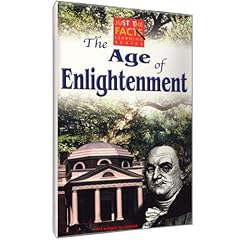
Excellent DVD, featuring three professors, one of which is historian Margaret C. Jacob, author of several books on Free-Masonry, including "The Origins of Freemasonry: Facts & Fictions". This is cursory peek into the minds of Free-Masons of the 18th century, and perhaps a clue as to where the fraternity ought to be now.
Product Description
The Enlightenment may not have left physical evidence behind like the pyramids of Egypt or the Coliseum of Rome, but it has left us an intellectual heritage which is unquestionable in its importance. Prior to the Age of Enlightenment, people did not necessarily feel they deserved to be happy. The pursuit of happiness is an Enlightenment idea. Another concept that we take for granted today is that knowledge, or science can, and should make our lives better. Still another legacy of The Enlightenment is that we should trust reason and not superstitions and prejudices. The Age of Enlightenment is a period of history intrinsically French in its origins but predominately American in its impact. Scholars of The Enlightenment from Yale University and UCLA share their insights in this fascinating video. A must-see for any student of the History of Western Civilization.
Friday, August 14, 2009
"Of the Origin of Ideas" by David Hume (A Treatise of Human Nature, 1739)

Source: http://oll.libertyfund.org/index.php?option=com_staticxt&staticfile=show.php%3Ftitle=342&layout=html
Synopsis from Praxis
Hume explains and provides an argument for the origin of our ideas, which he divides into two sorts: impressions and ideas. These two differ only in degree. Impressions are what we ordinarily think of as our raw sensory data (from the 5 senses); ideas are our recollections of those impressions...again, differing only in degree and not in principle from an ontological standpoint.
Ideas only come from impressions. Hume is skeptical of innate ideas. It is these impressions and ideas that Hume uses as the foundation of human understanding, and ultimately empirical science. Hume's theory, as is those of his other Empiricist colleagues (e.g., Locke, Berkely, etc), should be compared and contrasted with that of the Rationalists (e.g., Leibniz, Spinoza, and Descartes). Both these schools of thought - Empiricists and Rationalist - influenced modern science as we know it today, which is ultimately a blend of empiricism and rationalism, not strictly, but in their general approaches. Both schools of science, no surprisingly, are derived from prior pre-Socratic, ancient Greek schools of philosophy, the Eliatics (e.g. Parmenides, Zeno, Melissus, etc) and the Ionians (e.g., Thales, Anaximander, Heraclitus, etc).
SECTION I.
Of the Origin of our Ideas.
All the perceptions of the human mind resolve themselves into two distinct kinds, which I shall call Impressions and Ideas. The difference betwixt these consists in the degrees of force and liveliness with which they strike upon the mind, and make their way into our thought or consciousness. Those perceptions, which enter with most force and violence, we may name impressions; and under this name I comprehend all our sensations, passions and emotions, as they make their first appearance in the soul. By ideas I mean the faint images of these in thinking and reasoning; such as, for instance, are all the perceptions excited by the present discourse, excepting only, those which arise from the sight and touch, and excepting the immediate pleasure or uneasiness it may occasion. I believe it will not be very necessary to employ many words in explaining this distinction. Every one of himself will readily perceive the difference betwixt feeling and thinking. The common degrees of these are easily distinguished; tho’ it is not impossible but in particular instances they may very nearly approach to each other. Thus in sleep, in a fever, in madness, or in any very violent emotions of soul, our ideas may approach to our impressions: As on the other hand it sometimes happens, that our impressions are so faint and low, that we cannot distinguish them from our ideas. But notwithstanding this near resemblance in a few instances, they are in general so very different, that no-one can make a scruple to rank them under distinct heads, and assign to each a peculiar name to mark the difference1 .
There is another division of our perceptions, which it will be convenient to observe, and which extends itself both to our impressions and ideas. This division is into Simple and Complex. Simple perceptions or impressions and ideas are such as admit of no distinction nor separation. The complex are the contrary to these, and may be distinguished into parts. Tho’ a particular colour, taste, and smell are qualities all united together in this apple, ’tis easy to perceive they are not the same, but are at least distinguishable from each other.
Having by these divisions given an order and arrangement to our objects, we may now apply ourselves to consider with the more accuracy their qualities and relations. The first circumstance, that strikes my eye, is the great resemblance betwixt our impressions and ideas in every other particular, except their degree of force and vivacity. The one seem to be in a manner the reflexion of the other; so that all the perceptions of the mind are double, and appear both as impressions and ideas. When I shut my eyes and think of my chamber, the ideas I form are exact representations of the impressions I felt; nor is there any circumstance of the one, which is not to be found in the other. In running over my other perceptions, I find still the same resemblance and representation. Ideas and impressions appear always to correspond to each other. This circumstance seems to me remarkable, and engages my attention for a moment.
Upon a more accurate survey I find I have been carried away too far by the first appearance, and that I must make use of the distinction of perceptions into simple and complex, to limit this general decision, that all our ideas and impressions are resembling. I observe, that many of our complex ideas never had impressions, that corresponded to them, and that many of our complex impressions never are exactly copied in ideas. I can imagine to myself such a city as the New Jerusalem, whose pavement is gold and walls are rubies, tho’ I never saw any such. I have seen Paris; but shall I affirm I can form such an idea of that city, as will perfectly represent all its streets and houses in their real and just proportions?
I perceive, therefore, that tho’ there is in general a great resemblance betwixt our complex impressions and ideas, yet the rule is not universally true, that they are exact copies of each other. We may next consider how the case stands with our simple perceptions. After the most accurate examination, of which I am capable, I venture to affirm, that the rule here holds without any exception, and that every simple idea has a simple impression, which resembles it; and every simple impression a correspondent idea. That idea of red, which we form in the dark, and that impression, which strikes our eyes in sun-shine, differ only in degree, not in nature. That the case is the same with all our simple impressions and ideas, ’tis impossible to prove by a particular enumeration of them. Every one may satisfy himself in this point by running over as many as he pleases. But if any one should deny this universal resemblance, I know no way of convincing him, but by desiring him to shew a simple impression, that has not a correspondent idea, or a simple idea, that has not a correspondent impression. If he does not answer this challenge, as ’tis certain he cannot, we may from his silence and our own observation establish our conclusion.
Thus we find, that all simple ideas and impressions resemble each other; and as the complex are formed from them, we may affirm in general, that these two species of perception are exactly correspondent. Having discover’d this relation, which requires no farther examination, I am curious to find some other of their qualities. Let us consider how they stand with regard to their existence, and which of the impressions and ideas are causes, and which effects.
The full examination of this question is the subject of the present treatise; and therefore we shall here content ourselves with establishing one general proposition, That all our simple ideas in their first appearance are deriv’d from simple impressions, which are correspondent to them, and which they exactly represent.
In seeking for phænomena to prove this proposition, I find only those of two kinds; but in each kind the phænomena are obvious, numerous, and conclusive. I first make myself certain, by a new review, of what I have already asserted, that every simple impression is attended with a correspondent idea, and every simple idea with a correspondent impression. From this constant conjunction of resembling perceptions I immediately conclude, that there is a great connexion betwixt our correspondent impressions and ideas, and that the existence of the one has a considerable influence upon that of the other. Such a constant conjunction, in such an infinite number of instances, can never arise from chance; but clearly proves a dependence of the impressions on the ideas, or of the ideas on the impressions. That I may know on which side this dependence lies, I consider the order of their first appearance; and find by constant experience, that the simple impressions always take the precedence of their correspondent ideas, but never appear in the contrary order. To give a child an idea of scarlet or orange, of sweet or bitter, I present the objects, or in other words, convey to him these impressions; but proceed not so absurdly, as to endeavour to produce the impressions by exciting the ideas. Our ideas upon their appearance produce not their correspondent impressions, nor do we perceive any colour, or feel any sensation merely upon thinking of them. On the other hand we find, that any impressions either of the mind or body is constantly followed by an idea, which resembles it, and is only different in the degrees of force and liveliness. The constant conjunction of our resembling perceptions, is a convincing proof, that the one are the causes of the other; and this priority of the impressions is an equal proof, that our impressions are the causes of our ideas, not our ideas of our impressions.
To confirm this I consider another plain and convincing phænomenon; which is, that where-ever by any accident the faculties, which give rise to any impressions, are obstructed in their operations, as when one is born blind or deaf; not only the impressions are lost, but also their correspondent ideas; so that there never appear in the mind the least traces of either of them. Nor is this only true, where the organs of sensation are entirely destroy’d, but likewise where they have never been put in action to produce a particular impression. We cannot form to ourselves a just idea of the taste of a pine-apple, without having actually tasted it.
There is however one contradictory phænomenon, which may prove, that ’tis not absolutely impossible for ideas to go before their correspondent impressions. I believe it will readily be allow’d, that the several distinct ideas of colours, which enter by the eyes, or those of sounds, which are convey’d by the hearing, are really different from each other, tho’ at the same time resembling. Now if this be true of different colours, it must be no less so of the different shades of the same colour, that each of them produces a distinct idea, independent of the rest. For if this shou’d be deny’d, ’tis possible, by the continual gradation of shades, to run a colour insensibly into what is most remote from it; and if you will not allow any of the means to be different, you cannot without absurdity deny the extremes to be the same. Suppose therefore a person to have enjoyed his sight for thirty years, and to have become perfectly well acquainted with colours of all kinds, excepting one particular shade of blue, for instance, which it never has been his fortune to meet with. Let all the different shades of that colour, except that single one, be plac’d before him, descending gradually from the deepest to the lightest; ’tis plain, that he will perceive a blank, where that shade is wanting, and will be sensible, that there is a greater distance in that place betwixt the continguous colours, than in any other. Now I ask, whether ’tis possible for him, from his own imagination, to supply this deficiency, and raise up to himself the idea of that particular shade, tho’ it had never been conveyed to him by his senses? I believe there are few but will be of opinion that he can; and this may serve as a proof, that the simple ideas are not always derived from the correspondent impressions; tho’ the instance is so particular and singular, that ’tis scarce worth our observing, and does not merit that for it alone we should alter our general maxim.
But besides this exception, it may not be amiss to remark on this head, that the principle of the priority of impressions to ideas must be understood with another limitation, viz. that as our ideas are images of our impressions, so we can form secondary ideas, which are images of the primary; as appears from this very reasoning concerning them. This is not, properly speaking, an exception to the rule so much as an explanation of it. Ideas produce the images of themselves in new ideas; but as the first ideas are supposed to be derived from impressions, it still remains true, that all our simple ideas proceed either mediately or immediately from their correspondent impressions.
This then is the first principle I establish in the science of human nature; nor ought we to despise it because of the simplicity of its appearance. For ’tis remarkable, that the present question concerning the precedency of our impressions or ideas, is the same with what has made so much noise in other terms, when it has been disputed whether there be any innate ideas, or whether all ideas be derived from sensation and reflexion. We may observe, that in order to prove the ideas of extension and colour not to be innate, philosophers do nothing but shew, that they are conveyed by our senses. To prove the ideas of passion and desire not to be innate, they observe that we have a preceding experience of these emotions in ourselves. Now if we carefully examine these arguments, we shall find that they prove nothing but that ideas are preceded by other more lively perceptions, from which they are derived, and which they represent. I hope this clear stating of the question will remove all disputes concerning it, and will render this principle of more use in our reasonings, than it seems hitherto to have been.
Thursday, August 13, 2009
Founding Freemasons: “Ancient” and “Modern” Masons in the Founding Era of America
Founding Freemasons: “Ancient” and “Modern” Masons in the Founding Era of America with Particular Emphasis on Masons Benjamin Franklin and George Washington
by Hannah R. Ayers, Liberty University
http://digitalcommons.liberty.edu/honors/31/
April 2008
Abstract
From its inception in 1733, American freemasonry represented a fair portion of American society. However, though there would be groups of freemasons during this time whose ideals and morals could be traced to a Christian belief system, not all American freemasons considered themselves Christians. Though his book is full of excellent research, David Barton, founder of the Christian heritage research group Wallbuilders, generalized American freemasonry as being entirely Christian in his recent publication The Question of Freemasonry and the Founding Fathers. Though there were undoubtedly Christian groups of freemasons during this time period, the assertion that all masons were Christians is not entirely true and needs to be corrected. The non- Christian masons during this time period, known as “Modern” masons, never claimed a Christian heritage but instead had set up lodges that promoted values other than those espoused in Christianity. In order to correct Barton’s partially incorrect analysis of American masons during this era, evidence will be given to convince the reader of both the reality of anti-Christian freemasons and their feud with their Christian counterparts. The definition of both “Ancient” and “Modern” American freemasonry will be documented, the formation of and struggle between the two groups will be detailed, and the Enlightenment ideals that represented many of the beliefs of American “Modern” freemasons will be explained. Further, as examples of men who did not adhere to Christian values in the Craft, short biographies of Masons Benjamin Franklin and George Washington’s involvement with secular freemasonry will also be given.
by Hannah R. Ayers, Liberty University
http://digitalcommons.liberty.edu/honors/31/
April 2008
Abstract
From its inception in 1733, American freemasonry represented a fair portion of American society. However, though there would be groups of freemasons during this time whose ideals and morals could be traced to a Christian belief system, not all American freemasons considered themselves Christians. Though his book is full of excellent research, David Barton, founder of the Christian heritage research group Wallbuilders, generalized American freemasonry as being entirely Christian in his recent publication The Question of Freemasonry and the Founding Fathers. Though there were undoubtedly Christian groups of freemasons during this time period, the assertion that all masons were Christians is not entirely true and needs to be corrected. The non- Christian masons during this time period, known as “Modern” masons, never claimed a Christian heritage but instead had set up lodges that promoted values other than those espoused in Christianity. In order to correct Barton’s partially incorrect analysis of American masons during this era, evidence will be given to convince the reader of both the reality of anti-Christian freemasons and their feud with their Christian counterparts. The definition of both “Ancient” and “Modern” American freemasonry will be documented, the formation of and struggle between the two groups will be detailed, and the Enlightenment ideals that represented many of the beliefs of American “Modern” freemasons will be explained. Further, as examples of men who did not adhere to Christian values in the Craft, short biographies of Masons Benjamin Franklin and George Washington’s involvement with secular freemasonry will also be given.
Wednesday, August 12, 2009
U.S. Recognition of French Grand Lodges in the 1900s
U.S. Recognition of French Grand Lodges in the 1900s
By Paul Bessel
http://thebluelodge.org/essays_on_freemasonry-210/u_s_recognition_of_french_grand_lodges_in_the_1900s-15980/
OR
http://www.praxislodge.org/docs/U.S.%20Recognition%20of%20French%20Grand%20Lodges%20in%20the%201900s.pdf
Synopsis
Modern or Continental Free-Masonry, that which is derived from the Grand Orient of France, and now present in the USA as the Grant Orient of the United States, is considered “irregular” by most all Anglo-American or " Blue" lodges in the USA. This means that Modern Free-Masonry is not recognized as legitimate Masonry by Blue Grand Lodges, and Blue lodges do not allow their members to visit Modern lodges or member of Modern lodges to visit their lodges. This is only a general rule, as their are limited exceptions. This was not always the case. Prior to 1869, Grand Lodges in the US recognized both the Grand Orient of France and Modern lodges in the U.S, and allowed visitations.
However, in 1868, the Grand Orient of France recognized a Grand Orient in Louisiana (a competitor to the Grand Lodge of Louisiana), which allowed members to join regardless of nationality, race, or color. That was the beginning of Blue lodges not recognizing Modern lodges (based on the GOdF’s philosophy against slavery), but the split formally occurred in 1869 when the GOdF passed a resolution that neither color, race, nor religion should disqualify a man for initiation, and was further reinforced in 1877 when the GOdF declared its principle of “absolute freedom of conscience” and eliminated both belief in God as a membership requirement and use of the Bible in lodges.*
However, over 25% of Blue lodges in the U.S. re-recognized Modern lodges after 1918 (likely not coincidental to the US desire to have French allies during WW I). Some lodges recognized both the Grand Orient of France and the Grand Lodge of France, others accepted only one or another, for various reasons, mostly political, social, and territorial. Moreover, as the article suggests, the concept of “regularity” is highly relative and deeply immersed in ever-changing political and social ideologies.
* Prior to 1760, even the Grand Lodge of England did not require the Bible in lodges
By Paul Bessel
http://thebluelodge.org/essays_on_freemasonry-210/u_s_recognition_of_french_grand_lodges_in_the_1900s-15980/
OR
http://www.praxislodge.org/docs/U.S.%20Recognition%20of%20French%20Grand%20Lodges%20in%20the%201900s.pdf
Synopsis
Modern or Continental Free-Masonry, that which is derived from the Grand Orient of France, and now present in the USA as the Grant Orient of the United States, is considered “irregular” by most all Anglo-American or " Blue" lodges in the USA. This means that Modern Free-Masonry is not recognized as legitimate Masonry by Blue Grand Lodges, and Blue lodges do not allow their members to visit Modern lodges or member of Modern lodges to visit their lodges. This is only a general rule, as their are limited exceptions. This was not always the case. Prior to 1869, Grand Lodges in the US recognized both the Grand Orient of France and Modern lodges in the U.S, and allowed visitations.
However, in 1868, the Grand Orient of France recognized a Grand Orient in Louisiana (a competitor to the Grand Lodge of Louisiana), which allowed members to join regardless of nationality, race, or color. That was the beginning of Blue lodges not recognizing Modern lodges (based on the GOdF’s philosophy against slavery), but the split formally occurred in 1869 when the GOdF passed a resolution that neither color, race, nor religion should disqualify a man for initiation, and was further reinforced in 1877 when the GOdF declared its principle of “absolute freedom of conscience” and eliminated both belief in God as a membership requirement and use of the Bible in lodges.*
However, over 25% of Blue lodges in the U.S. re-recognized Modern lodges after 1918 (likely not coincidental to the US desire to have French allies during WW I). Some lodges recognized both the Grand Orient of France and the Grand Lodge of France, others accepted only one or another, for various reasons, mostly political, social, and territorial. Moreover, as the article suggests, the concept of “regularity” is highly relative and deeply immersed in ever-changing political and social ideologies.
* Prior to 1760, even the Grand Lodge of England did not require the Bible in lodges
Freedom of Conscience (from the Grand Orient of France)
Modern Free-Masonry states freedom of conscience as one of its core values. This is not a concept that is easily understood. It its most basic form, it implies a multiplicity of other concepts such as freedom of thought and expression, separation of church and state, emancipation of lifestyles, freedom from the suppression of religion and government, refusal of racism, and many others. The Grand Orient of France has a very informative web page that outlines Freedom of Conscience, as it relates to the concept of "Laïcité".
Read more at http://ns6745.ovh.net/~godf/foreign/uk/laicite_uk.html
Read more at http://ns6745.ovh.net/~godf/foreign/uk/laicite_uk.html
Tuesday, August 11, 2009
You are invited to an Open House and Q&A Session for Praxis Lodge - Open to the public
You are invited to an Open House and Q&A Session for Praxis Lodge - Open to the public
Learn the answers to these questions and more...
More details here.
- What is Continental or Modern Free-Masonry?
- What is the difference between mainstream or "Blue Lodge" Free-Masonry and Continental Free-Masonry?
- Are there other Continental Masonic lodges in the United States?
- Is Continential Free-Masonry considered "irreguar" by Blue Lodge Masons? Has it always been that way in the USA?
Learn the answers to these questions and more...
More details here.
Sunday, August 9, 2009
You are invited to an Open House and Q&A Session for Praxis Lodge - Open to the public
More details here.
- What is Continental or Modern Free-Masonry?
- What is the difference between mainstream or "Blue Lodge" Free-Masonry and Continental Free-Masonry?
- Are there other Continental Masonic lodges in the United States?
- Is Continential Free-Masonry considered "irreguar" by Blue Lodge Masons? Has it always been that way in the USA?
Learn the answers to these questions and more...
More details here.
Wednesday, August 5, 2009
Praxis Lodge on Facebook!
Praxis Lodge is now on Facebook!
http://www.facebook.com/profile.php?v=info&edit_info=all#/profile.php?id=100000114226723&ref=profile
http://www.facebook.com/profile.php?v=info&edit_info=all#/profile.php?id=100000114226723&ref=profile
Sunday, August 2, 2009
First Meeting
On Wednesday, August 5, Praxis will hold its first official meeting, with the primary agenda item of planning the Lodge's Entered Apprentice initiation program.
Monthly Lodge meetings from this point onward will occur the first Wednesday of every month, at 7pm MST. Educational meetings will occur the third Wednesday of every month at 7pm MST.
Monthly Lodge meetings from this point onward will occur the first Wednesday of every month, at 7pm MST. Educational meetings will occur the third Wednesday of every month at 7pm MST.
Wednesday, July 22, 2009

On Sunday, July 19, 2009, the Executive Board of the Grand Orient of the United States accepted the Triangle Praxis Lodge. This is a very exciting and historical Masonic event in Boise, Idaho, and with perseverance, creativity, and time, Praxis will hopefully exemplify the full potential of what Free-Masonry can be in the new millennium.
Praxis Lodge is currently planning a unique and exciting Entered Apprentice curriculum, which will launch in the Fall of 2009 and introduce several new brothers to the Lodge.
Visit the Praxis Lodge website at www.praxislodge.org
Subscribe to:
Posts (Atom)